Grouping by Formulas Example for Blazor

Nevron NOV Grid for Blazor ships with hundreds of examples with full source code, as part of the Nevron Open Vision Suite. All Blazor Grid examples are also available as a stand-alone Visual Studio solution in C#, which you can download from the links below.

Grouping by Formulas Example for Blazor Description

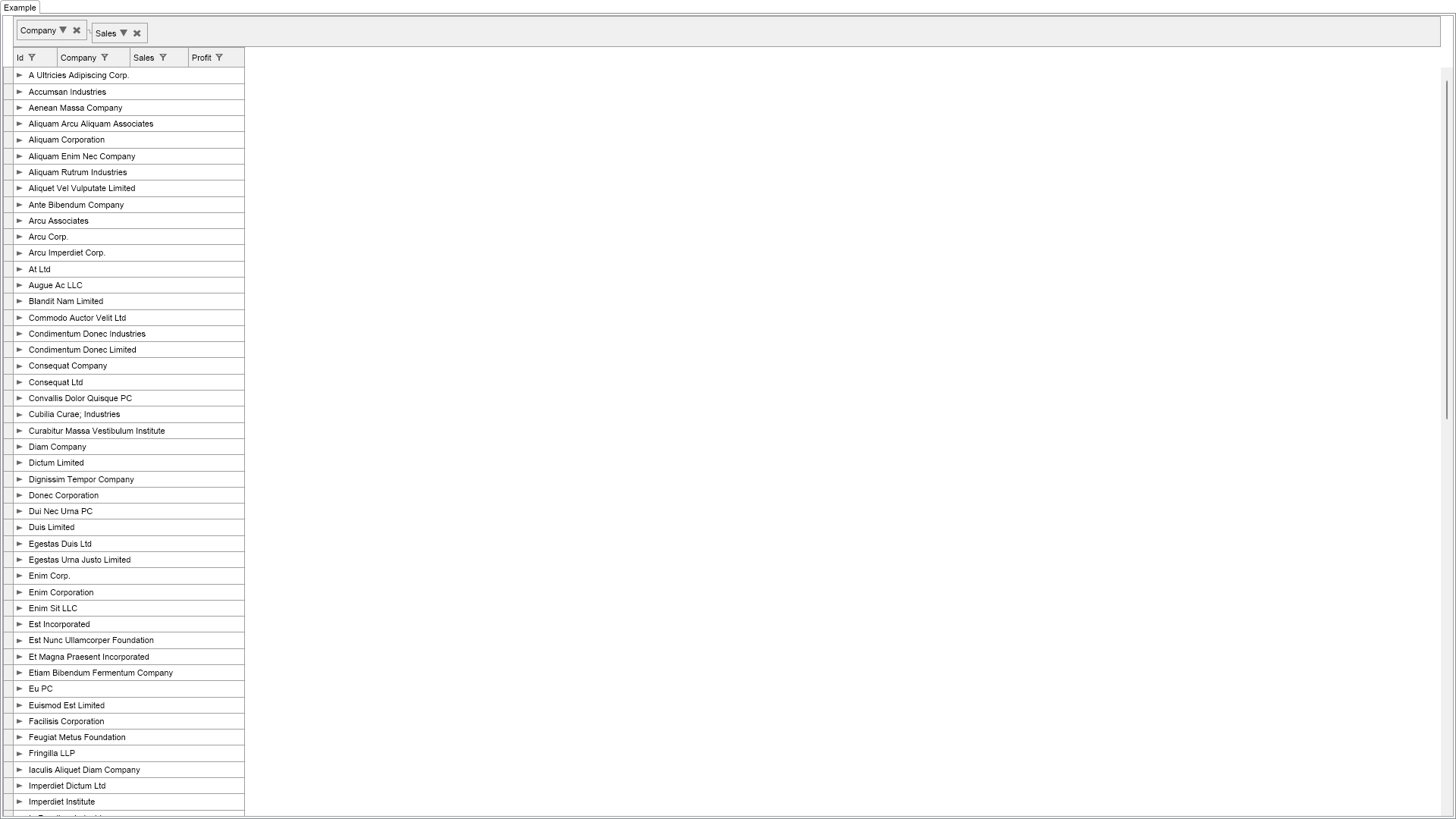
Demonstrates formula row values in combination with grouping rules.

In this example we have created two grouping rules, one that groups by the Company field and another one that groups by the Sales larger than 1000. Both conditions have been expressed with instances of the NFormulaRowValue.

Furthermore the example creates custom group row cells that display the "Sales greater than 1000" or "Sales less than or equal to 1000" for the second grouping rule rows.


Formula Grouping Example

C# Grouping by Formulas Example Code for Nevron Grid for Blazor
Language: C#

using Nevron.Nov;
using Nevron.Nov.Dom;
using Nevron.Nov.Graphics;
using Nevron.Nov.Grid;
using Nevron.Nov.Layout;
using Nevron.Nov.UI;
using Nevron.Nov.Windows.Forms;
using System.Windows.Forms;

namespace NovWinFormsProject
{
	public partial class Form1 : Form
	{
		#region Constructors

		public Form1()
		{
			InitializeComponent();

			// Set form title
			Text = "NOV WinForms - NFormulaGroupingExample";

			// Create the NOV example and its controls
			NWidget exampleContent = CreateExampleContent();
			NWidget exampleControls = CreateExampleControls();
			if (exampleControls != null)
			{
				exampleControls.PreferredWidth = 300;
			}

			// Place the example and its controls in a pair box
			NPairBox pairBox = new NPairBox(exampleContent, exampleControls);
			pairBox.FillMode = ENStackFillMode.First;
			pairBox.FitMode = ENStackFitMode.First;
			pairBox.Margins = new NMargins(NDesign.HorizontalSpacing, NDesign.VerticalSpacing);

			// Host the example in the form
			NNovWidgetHost host = new NNovWidgetHost(pairBox);
			host.Dock = DockStyle.Fill;
			Controls.Add(host);
		}

		#endregion

        #region Example

        public NWidget CreateExampleContent()
        {
            NTableGridView gridView = new NTableGridView();
            NTableGrid grid = gridView.Grid;

            // bind the grid to the data source
            grid.DataSource = NDummyDataSource.CreateCompanySalesDataSource();

            // create a grouping rule that groups by the company field value first
            // note that in order to indicate the grouping in the grouping panel, the rule must reference the respective column
            NColumn companyColumn = grid.Columns.GetColumnByFieldName("Company");
            string fx1 = grid.CreateFormulaFieldName("Company");
            NFormulaRowValue fxRowValue = new NFormulaRowValue(fx1);
            NGroupingRule groupingRule1 = new NGroupingRule(companyColumn, fxRowValue, ENSortingDirection.Ascending);
            grid.GroupingRules.Add(groupingRule1);

            // create a grouping rule that groups by sales larger than 1000 next
            // note that in order to indicate the grouping in the grouping panel, the rule must reference the respective column
            string fx2 = grid.CreateFormulaFieldName("Sales") + ">1000";
            NColumn salesColumn = grid.Columns.GetColumnByFieldName("Sales");
            NGroupingRule groupingRule2 = NGroupingRule.FromFormula(salesColumn, fx2);

            groupingRule2.CreateGroupRowCellsDelegate += delegate(NGroupingRuleCreateGroupRowCellsArgs arg)
            {
                bool groupValue = (bool)((NVariant)arg.GroupRow.GroupValue);
                string text =  groupValue? "Sales greater than 1000" : "Sales less than or equal to 1000";
                return new NGroupRowCell[] { new NGroupRowCell(text) };
            };
            grid.GroupingRules.Add(groupingRule2);
            
            // alter some view preferences
            grid.AllowSortColumns = true;
            grid.AlternatingRows = true;
            grid.RowHeaders.Visible = true;

            return gridView;
        }

        public NWidget CreateExampleControls()
        {
            return null;
        }
        public string GetExampleDescription()
        {
            return @"

Demonstrates formula row values in combination with grouping rules.

In this example we have created two grouping rules, one that groups by the Company field and another one that groups by the Sales larger than 1000. Both conditions have been expressed with instances of the NFormulaRowValue.

Furthermore the example creates custom group row cells that display the ""Sales greater than 1000"" or ""Sales less than or equal to 1000"" for the second grouping rule rows.

"; } /// /// Gets the relevant documentation links for the example /// /// public (string Name, string Url)[] GetDocumentationUrls() { return new[] { ("Grid Grouping", "https://www.nevron.com/docs/openvision/grid-grouping.html"), ("Formula Basics", "https://www.nevron.com/docs/openvision/formula-basics.html"), ("Functions", "https://www.nevron.com/docs/openvision/formula-functions.html"), ("Grid Row Values", "https://www.nevron.com/docs/openvision/grid-row-values.html"), }; } #endregion #region Implementation #endregion #region Event Handlers #endregion #region Fields #endregion #region Static Methods #endregion #region Constants #endregion #region Nested Types #endregion } }

Download a fully functional C# (.cs) Grouping by Formulas Example for Blazor Solution