Nevron NOV Diagram for Blazor ships with hundreds of examples with full source code, as part of the Nevron Open Vision Suite.
All Blazor Diagram examples are also available as a stand-alone Visual Studio solution
in C#,
which you can download from the links below.
UML (Class Diagram) Example for Blazor Description
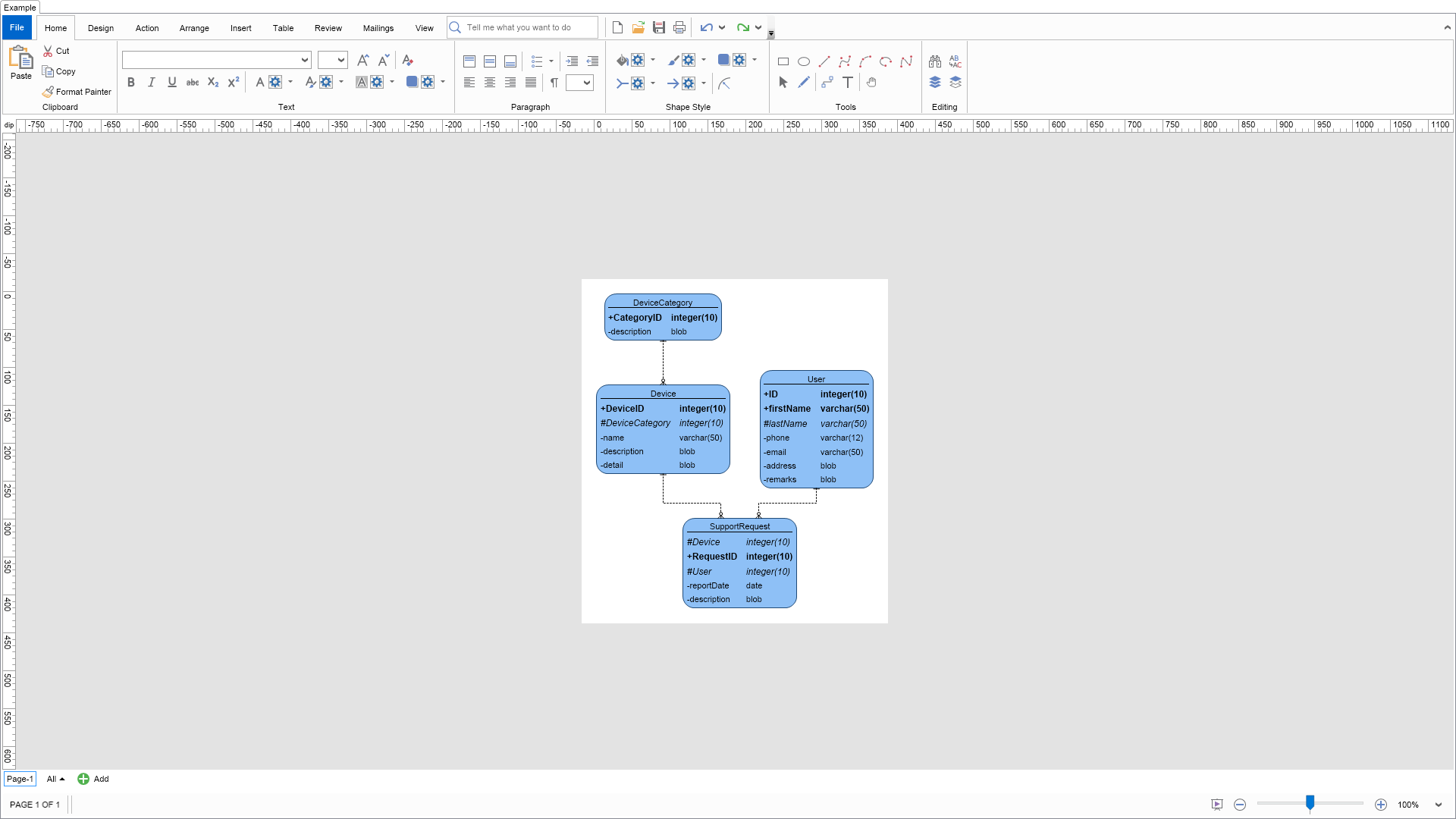
This example demonstrates how to create an UML class diagrams.
C# UML (Class Diagram) Example Code for Nevron Diagram for Blazor
Language: C#
using Nevron.Nov;
using Nevron.Nov.DataStructures;
using Nevron.Nov.Diagram;
using Nevron.Nov.Diagram.Layout;
using Nevron.Nov.Dom;
using Nevron.Nov.Graphics;
using Nevron.Nov.Layout;
using Nevron.Nov.UI;
using Nevron.Nov.Windows.Forms;
using System;
using System.Windows.Forms;
namespace NovWinFormsProject
{
public partial class Form1 : Form
{
#region Constructors
public Form1()
{
InitializeComponent();
// Set form title
Text = "NOV WinForms - NUmlClassDiagramExample";
// Create the NOV example and its controls
NWidget exampleContent = CreateExampleContent();
NWidget exampleControls = CreateExampleControls();
if (exampleControls != null)
{
exampleControls.PreferredWidth = 300;
}
// Place the example and its controls in a pair box
NPairBox pairBox = new NPairBox(exampleContent, exampleControls);
pairBox.FillMode = ENStackFillMode.First;
pairBox.FitMode = ENStackFitMode.First;
pairBox.Margins = new NMargins(NDesign.HorizontalSpacing, NDesign.VerticalSpacing);
// Host the example in the form
NNovWidgetHost host = new NNovWidgetHost(pairBox);
host.Dock = DockStyle.Fill;
Controls.Add(host);
}
#endregion
#region Example
public NWidget CreateExampleContent()
{
// Create a simple drawing
NDrawingViewWithRibbon drawingViewWithRibbon = new NDrawingViewWithRibbon();
m_DrawingView = drawingViewWithRibbon.View;
m_DrawingView.Document.HistoryService.Pause();
try
{
InitDiagram(m_DrawingView.Document);
}
finally
{
m_DrawingView.Document.HistoryService.Resume();
}
return drawingViewWithRibbon;
}
public NWidget CreateExampleControls()
{
return null;
}
public string GetExampleDescription()
{
return @"
This example demonstrates how to create an UML class diagrams.
";
}
///
/// Gets the relevant documentation links for the example
///
///
public (string Name, string Url)[] GetDocumentationUrls()
{
return new[]
{
("Predefined Libraries", "https://www.nevron.com/docs/openvision/diagram-predefined-libraries.html"),
("Shapes", "https://www.nevron.com/docs/openvision/diagram-shapes.html"),
("Routable Connectors", "https://www.nevron.com/docs/openvision/diagram-routable-connectors.html"),
};
}
private void InitDiagram(NDrawingDocument drawingDocument)
{
// Get drawing and active page
NDrawing drawing = drawingDocument.Content;
NPage activePage = drawing.ActivePage;
// Hide ports and grid
drawing.ScreenVisibility.ShowGrid = false;
// Create styles
NRule rule = CreateConnectorOneToManyRule();
NStyleSheet styleSheet = new NStyleSheet();
styleSheet.Add(rule);
drawingDocument.StyleSheets.Add(styleSheet);
// Create some UML shapes
NShape shapeDevice = CreateUmlShape("Device", new NMemberInfo[] {
new NMemberInfo(ENMemberVisibility.Public, "DeviceID", "integer(10)"),
new NMemberInfo(ENMemberVisibility.Protected, "DeviceCategory", "integer(10)"),
new NMemberInfo(ENMemberVisibility.Private, "name", "varchar(50)"),
new NMemberInfo(ENMemberVisibility.Private, "description", "blob"),
new NMemberInfo(ENMemberVisibility.Private, "detail", "blob")
});
activePage.Items.Add(shapeDevice);
NShape shapeDeviceCategory = CreateUmlShape("DeviceCategory", new NMemberInfo[] {
new NMemberInfo(ENMemberVisibility.Public, "CategoryID", "integer(10)"),
new NMemberInfo(ENMemberVisibility.Private, "description", "blob")
});
activePage.Items.Add(shapeDeviceCategory);
NShape shapeSupportRequest = CreateUmlShape("SupportRequest", new NMemberInfo[] {
new NMemberInfo(ENMemberVisibility.Protected, "Device", "integer(10)"),
new NMemberInfo(ENMemberVisibility.Public, "RequestID", "integer(10)"),
new NMemberInfo(ENMemberVisibility.Protected, "User", "integer(10)"),
new NMemberInfo(ENMemberVisibility.Private, "reportDate", "date"),
new NMemberInfo(ENMemberVisibility.Private, "description", "blob")
});
activePage.Items.Add(shapeSupportRequest);
NShape shapeUser = CreateUmlShape("User", new NMemberInfo[] {
new NMemberInfo(ENMemberVisibility.Public, "ID", "integer(10)"),
new NMemberInfo(ENMemberVisibility.Public, "firstName", "varchar(50)"),
new NMemberInfo(ENMemberVisibility.Protected, "lastName", "varchar(50)"),
new NMemberInfo(ENMemberVisibility.Private, "phone", "varchar(12)"),
new NMemberInfo(ENMemberVisibility.Private, "email", "varchar(50)"),
new NMemberInfo(ENMemberVisibility.Private, "address", "blob"),
new NMemberInfo(ENMemberVisibility.Private, "remarks", "blob")
});
activePage.Items.Add(shapeUser);
// Connect the shapes
Connect(GetShapeByName("DeviceCategory"), "CategoryID", GetShapeByName("Device"), "DeviceCategory");
Connect(GetShapeByName("Device"), "DeviceID", GetShapeByName("SupportRequest"), "Device");
Connect(GetShapeByName("User"), "ID", GetShapeByName("SupportRequest"), "User");
// Subscribe to the drawing view's Registered event to layout the shapes
// when the drawing view is registered in its owner document
m_DrawingView.Registered += OnDrawingViewRegistered;
}
#endregion
#region Implementation
///
/// Creates the rule for one to many connectors.
///
///
private NRule CreateConnectorOneToManyRule()
{
NRule rule = new NRule();
NSelectorBuilder sb = rule.GetSelectorBuilder();
sb.Start();
sb.Type(NGeometry.NGeometrySchema);
sb.ChildOf();
sb.UserClass(ConnectorOneToManyClassName);
sb.End();
rule.Declarations.Add(new NValueDeclaration(NGeometry.StrokeProperty,
new NStroke(1, NColor.Black, ENDashStyle.Dash)));
rule.Declarations.Add(new NValueDeclaration(NGeometry.BeginArrowheadProperty,
new NArrowhead(ENArrowheadShape.VerticalLine, 8, 8, null, new NStroke(1, NColor.Black))));
rule.Declarations.Add(new NValueDeclaration(NGeometry.EndArrowheadProperty,
new NArrowhead(ENArrowheadShape.InvertedLineArrowWithCircleNoFill, 8, 8, null, new NStroke(1, NColor.Black))));
return rule;
}
///
/// Creates a one to many connector from the member1 of shape1 to
/// member2 of shape2.
///
///
///
///
///
private void Connect(NShape shape1, string member1, NShape shape2, string member2)
{
NRoutableConnector connector = new NRoutableConnector();
connector.UserClass = ConnectorOneToManyClassName;
m_DrawingView.ActivePage.Items.Add(connector);
// Get or create the ports
NPort port1 = GetOrCreatePort(shape1, member1);
NPort port2 = GetOrCreatePort(shape2, member2);
if (port1 == null)
throw new ArgumentException("A member with name '" + member1 + "' not found in shape '" + shape1.Name + "'", "member");
if (port1 == null)
throw new ArgumentException("A member with name '" + member2 + "' not found in shape '" + shape2.Name + "'", "member");
// Connect the ports
connector.GlueBeginToPort(port1);
connector.GlueEndToPort(port2);
}
///
/// Gets the port with the given name or creates one if a port with the given name
/// does not exist in the specified shape.
///
///
///
///
private NPort GetOrCreatePort(NShape shape, string member)
{
NPort port = shape.GetPortByName(member);
if (port != null)
return port;
// The port does not exist, so create it
NLabel label = (NLabel)shape.Widget.GetFirstDescendant(new NLabelByTextFilter(member));
if (label == null)
return null;
NPairBox pairBox = (NPairBox)label.GetFirstAncestor(NPairBox.NPairBoxSchema);
NStackPanel stack = (NStackPanel)pairBox.ParentNode;
double yRelative = (pairBox.GetAggregationInfo().Index + 0.5) / stack.Count;
port = new NPort(0.5, yRelative, true);
port.SetDirection(ENBoxDirection.Right);
shape.Ports.Add(port);
return port;
}
///
/// Creates an UML class diagram shape.
///
///
///
///
private NShape CreateUmlShape(string name, NMemberInfo[] memberInfos)
{
// Create the shape
NShape shape = new NShape();
shape.Name = name;
// Set a rounded rectangle geometry
NDrawRectangle drawRectangle = new NDrawRectangle(0, 0, 1, 1);
drawRectangle.Relative = true;
shape.Geometry.Add(drawRectangle);
shape.Geometry.CornerRounding = 15;
// Create a stack panel
NStackPanel stack = new NStackPanel();
stack.Margins = new NMargins(5);
stack.Direction = ENHVDirection.TopToBottom;
// Create the title label
NLabel titleLabel = new NLabel(name);
titleLabel.TextAlignment = ENContentAlignment.MiddleCenter;
titleLabel.Border = NBorder.CreateFilledBorder(NColor.Black);
titleLabel.BorderThickness = new NMargins(0, 0, 0, 1);
stack.Add(titleLabel);
// Create the member info pair boxes
for (int i = 0; i < memberInfos.Length; i++)
{
stack.Add(CreatePairBox(memberInfos[i]));
}
shape.Widget = new NUniSizeBoxGroup(stack);
BindSizeToDesiredSize(shape);
return shape;
}
///
/// Creates a pair box from the given member information.
///
///
///
private NPairBox CreatePairBox(NMemberInfo memberInfo)
{
NPairBox pairBox = new NPairBox((char)memberInfo.Visibility + memberInfo.Name, memberInfo.Type, true);
pairBox.Spacing = NDesign.HorizontalSpacing * 2;
pairBox.FillMode = ENStackFillMode.Equal;
pairBox.FitMode = ENStackFitMode.Last;
switch (memberInfo.Visibility)
{
case ENMemberVisibility.Public:
// Set bold font style
pairBox.Font = new NFont(NFontDescriptor.DefaultSansFamilyName, 9, ENFontStyle.Bold);
break;
case ENMemberVisibility.Protected:
// Set italic font style
pairBox.Font = new NFont(NFontDescriptor.DefaultSansFamilyName, 9, ENFontStyle.Italic);
break;
case ENMemberVisibility.Private:
// Do not change the font style
break;
}
return pairBox;
}
///
/// Binds the size of the shape to the embedded widget desired size.
///
///
private void BindSizeToDesiredSize(NShape shape)
{
NWidget widget = shape.Widget;
// bind shape width to button desired width
NBindingFx bx = new NBindingFx(widget, NButton.DesiredWidthProperty);
bx.Guard = true;
shape.SetFx(NShape.WidthProperty, bx);
// bind shape height to button desired height
NBindingFx by = new NBindingFx(widget, NButton.DesiredHeightProperty);
by.Guard = true;
shape.SetFx(NShape.HeightProperty, by);
shape.AllowResizeX = false;
shape.AllowRotate = false;
shape.AllowResizeY = false;
}
///
/// Gets the first shape with the given name in the drawing document's active page.
///
///
///
private NShape GetShapeByName(string name)
{
NPage activePage = m_DrawingView.ActivePage;
return (NShape)activePage.GetFirstDescendant(new NShapeByNameFilter(name));
}
///
/// Arranges the shapes in the active page.
///
private void ArrangeDiagram()
{
// Create and configure a layout
NLayeredGraphLayout layout = new NLayeredGraphLayout();
// Get all top-level shapes that reside in the active page
NPage activePage = m_DrawingView.ActivePage;
NList shapes = activePage.GetShapes(false);
// Create a layout context and use it to arrange the shapes using the current layout
NDrawingLayoutContext layoutContext = new NDrawingLayoutContext(m_DrawingView.Document, activePage);
layout.Arrange(shapes.CastAll
Download a fully functional C# (.cs) UML (Class Diagram) Example for Blazor Solution

 Chart for .NET
 Diagram for .NET
 User Interface for .NET
 Vision for SSRS
 Chart for SSRS
 Gauge for SSRS
 Map for SSRS
 Barcode for SSRS
 Vision for SharePoint
 Chart for SharePoint
 Gauge for SharePoint
 Map for SharePoint
 Barcode for SharePoint
 Open Vision for .NET


 Vision for .NET